
WASHINGTON—Yesterday, the Subcommittee on Cybersecurity, Information Technology, and Government Innovation held a hearing titled “Shaping Tomorrow: The Future of Artificial Intelligence.” During the hearing, members assessed the current state of artificial intelligence (AI) and its growing impact on the U.S. economy. Members also heard from witnesses on how American companies are shaping the AI landscape on the global stage and explored predictions about future developments in AI and how that will alter the function of the economy and the workforce.
Key Takeaways:
From health care to transportation to agriculture, AI is revolutionizing industries to improve outcomes and efficiency.
- Kinsey Fabrizio, President of Consumer Technology Association, testified that“We see AI anddigital twins that can simulateeverything from factories tocity planning. Agentic AI,which are autonomous systemsthat can manage everyday tasks. Vertical AI models, which arespecialized in areas likehealthcare and mobility oragriculture. Industrial AI,which is augmenting theworkforce and improving safety.And physical AI, which includesmore lifelike and useful robots.”
American companies like OpenAI, Anthropic, and xAI are competing for dominance with increasingly sophisticated frontier language models.
- Samuel Hammond, Chief Economist at the Foundation for American Innovation, testified that“The AI ResearchOrganization Meter carefullymeasures progress in AIautonomy, and has found thatthe length of tasks that agentscan perform doubles roughlyevery four to seven months, a trendthat has held for the past sixyears. When the earliestchatbots could only performtasks measured in seconds orminutes, OpenAI’s latest model,GPT 5, can coherentlyexecute tasks that take humanengineers two hours and 17minutes on average. If thistrend continues, we are onlytwo doublings away, roughly eight to14 months, from AI agents thatcan autonomouslyperform tasks that take humansa full eight-hour workday.”
Congress must examine the current state of AI explore predictions about future developments to maintain global dominance in the technology race.
- Ms. Fabrizio testified that“American companies are leading the AI race, but their success is not guaranteed. In China, thegovernment has made AI centralto its national strategy andinvested heavily in areas likesemiconductors, robots and datacenters. To counter thisstrategy, we need policies thathelp American companiesout-innovate the competition. IfAmerica falters in AI, we riskceding entire industries,supply chains, and influenceover global standards.”
- Mr. Hammond testified that“Even within thebounds of existinginfrastructure, and is comingsooner than many realize, it’sworth emphasizing that creating[artificial general intelligence] and superintelligent AI capable of outperforming humansin every domain is the explicitgoal of every leading us AIcompany. While some dismissthis as science fiction ormarketing hype, I assure youthe leaders of these companiesare deadly serious. As fortiming, Anthropic co-founderJack Clark testified recentlythat he expects transformativeAI to arrive as soon as the endof 2026 or early 2027. Even ifthese forecasts are on trend,AI capabilities will remainuneven for at least severalmore years. For a brief,paradoxical moment, we willhave superintelligent AIs thatcan prove new math theoremsbut still struggle to do manythings that humans find trivial.”
- The U.S. should focus on the responsible growth of AI to remain dominant in the global technology race.
Member Highlights:
Subcommittee Chairwoman Nancy Mace (R-S.C.) inquired about the balance between states’ rights and a ten-year moratorium on AI, as well as competition with China in the race to develop AI.
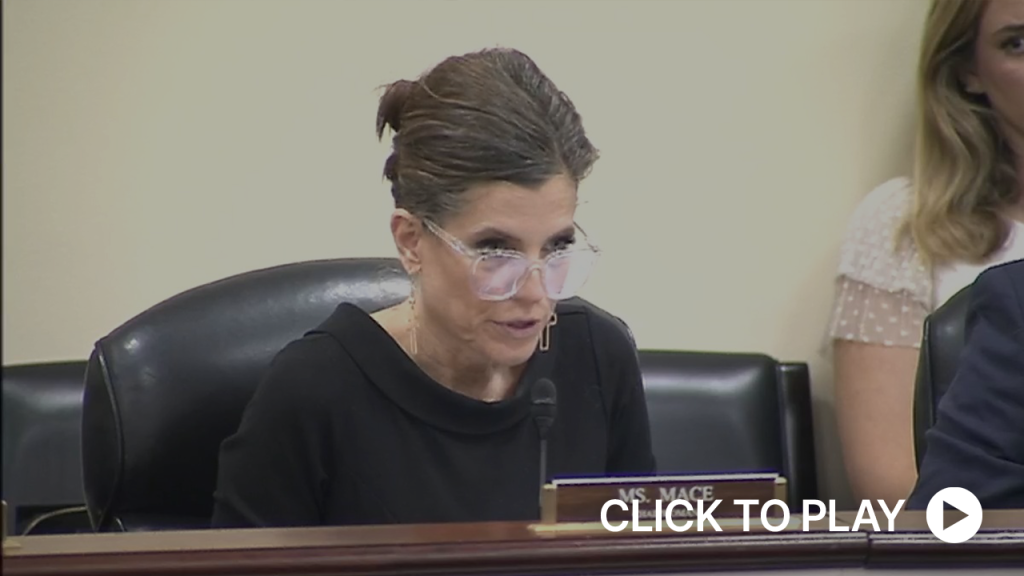
Subcommittee Chairwoman Mace:“[Ms. Fabrizio], you talkedabout the ten-yearmoratorium for states. Whyis it so important, you know,the states’ rightsthing has to be balanced? Butalso we don’t want to stifleinnovation. We know China,Russia, Iran—they’re not theydon’t have any guardrails. Theydon’t care. Talk about thata little bit.”
Ms. Fabrizio:“Yeah. Well, you said it.China doesn’t have that. Andit’s impossible for ourmember companies. Like I said,we have 80 percent small businesses,and they cannot compete andunderstand when there are athousand different potentiallaws that they have to complyto. It just stifles innovationcompletely. And for us to winthe AI race, we need to removethat barrier.”
Subcommittee Chairwoman Mace:“And it is a federal issuebecause it’s commerce acrossstate lines. And having allthose that regulatoryenvironment that’s a patchwork.And every state does make itvery difficult to operate. Andthen, Mr. Hammond, one thingthat struck me in yourtestimony, you’re talking aboutcompute energy. Talkto me a little bit more aboutthat. Let’s go into detail,because I agree with you. It’s a huge problem. How do wesolve it?”
Mr. Hammond:“It’s a great question.So, you know, there’s only ahandful of inputs that go intotraining and competing at thefrontier of these models.There’s the data, the humantalent, the compute and theenergy. With China, we’rebasically at parity withtalent, with data that may haveadvantages because they don’thave privacy laws.
Subcommittee Chairwoman Mace:“They’ve stolen a bunch of our data.”
Mr. Hammond:“Of course, and they alsosteal data and [intellectual property]. And so,really it comes down tohardware and energy. China hasadded over 400 gigawatts to the gridlast year. They’re about to dothe same thing this year.”
Subcommittee Chairwoman Mace:“How much have we added to our grid?”
Mr. Hammond:“Approximately zero. Imean, we’ve removed coal andadded renewables and that hascanceled out. And so, whatthat means is in lieu, but forthese export controls that arebarring China from our mostadvanced hardware, they wouldsurely leapfrog us within amatter of years.”
Rep. John McGuire (R-Va.) inquired about AI’s potential role in updating the U.S. energy grid to compete with China.
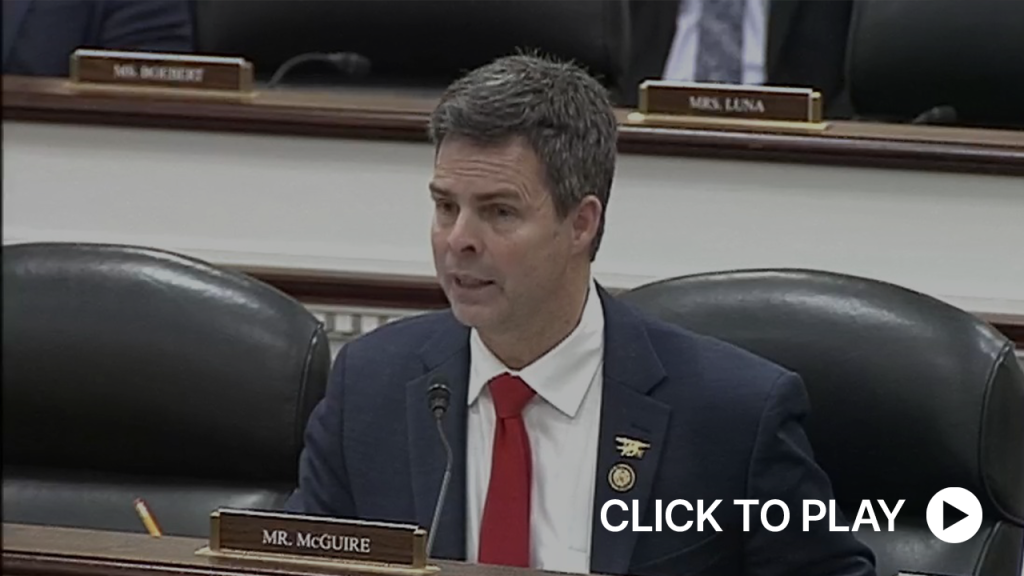
Rep. McGuire:“Yesterday, I asked an AI chatbox, how many acres of solarpanels would you need to powerAI in the U.S. by 2030? Anyone take a guess how muchthat would be? A thousandacres? Actually, let me seehere. It’s way more than athousand acres. It’s 500,000acres. That’s half the size ofDelaware. We should beinvesting in fossil fuels andnuclear. Small modular nuclearreactors. As we discussedearlier, we only need 500 acresto do the same job nationally.By 2030, we should be usingcoal, natural gas, traditionalnuclear power until [small nuclear reactors] areready, not solar panels. Allright. So let me ask thisquestion. Is China buildingthousands of solar farms topower their AI? Yes, or no?”
Ms. Fabrizio:“China is looking at energyin different ways than we are,but there are solutions that wecan look at to modernize ourenergy grid. And AI will help. AIwill help develop solutions andhelp us be smarter about thefuture.”
Rep. McGuire:“Mr. Hammond?”
Mr. Hammond:“Both. They added over 30new coal plants while alsoadding 300 gigawatts of renewable [energy].”
Rep. McGuire:“Mr. Hammondand Ms. Fabrizio, what aresome of the ways AI superintelligence mightactually help us solve theenergy problem?”
Mr. Hammond:“Well, when it comes toresearch and data and lookingfor solutions, AI is faster andcan help predict differentmodels and find differentsolutions where we may not beable to find them on our own.”
Ms. Fabrizio:“I believe we’re a year ortwo away from having fullyautonomous AI labs that coulddiscover new materials, newenergy sources, all the above.”
Rep. Eli Crane (R-Ariz.) inquired about Americans’ discernment of inflammatory speech misinformation spread by Chinese and Russian AI, balancing the expanded use of AI with preparing young Americans for the workforce, and recommendations for what Congress can do to monitor and regulate AI.
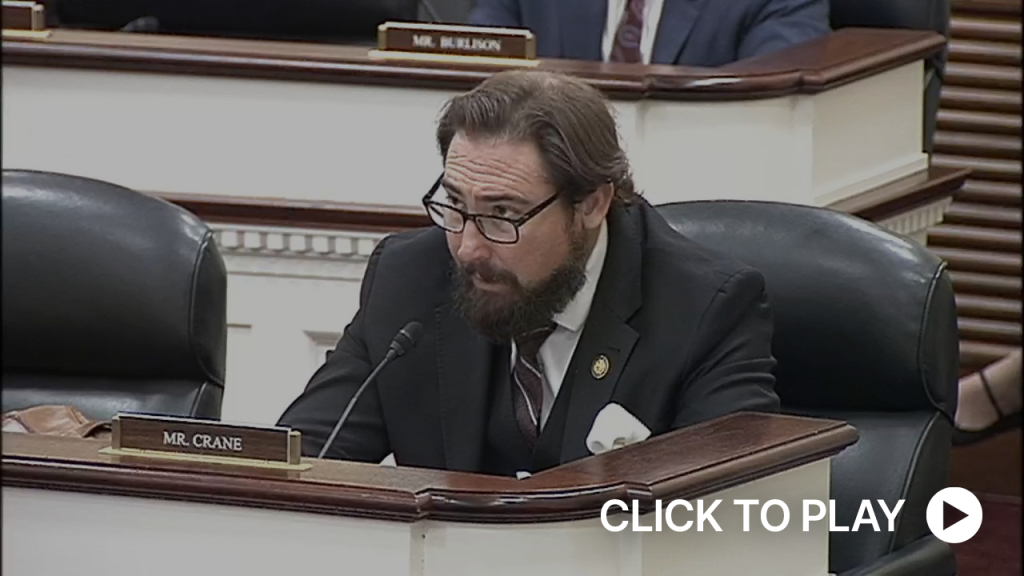
Rep. Crane:“How should theAmerican people be wary of theincrease of inflammatory speechfollowing the assassination ofCharlie [Kirk] and other massviolent events from Chinese andRussian bots?
Mr. Hammond:“It is a really big openchallenge. These socialmedia platforms have theirwork cut out for them. Wedo not yet have a reliablemeans of identifying what is abot, what isn’t, especially asthese systems become more andmore human-like in the way theyspeak. And so, I think it’ssomething we need to put [many]more resources into.”
Rep. Crane:“Okay. What do you thinkfederal agencies should bedoing to prevent the spreadingof misinformation by these botsto sow discourse in ourcommunities, in our country?”
Mr. Hammond:“I mean, at a minimum, weshould stop selling China andRussia the technology they usedto run those bots. You know,we these H20 chips which justgot approved or liable to beapproved for export to China. If they all go through,it’s going to roughly doubletheir data center capacity forrunning advanced AI models. Weknow from the past that they’veused these chips to power theirsurveillance drones, to powertheir gait recognitiontechnology. So, we’ve giventhem the ammunition thatthey’re using on us.”
Rep. Crane:“Okay. Next question for you,sir. When I was growing up inschool, it was often consideredcheating to use a calculator ona test. Right now, we have CEOsof Fortune 500 companiesbasically telling theiremployees that they need to beusing AI a few times a day, or they’ll be falling behind orbecome obsolete. My question is,how do we balance the expandeduse of AI and not demonize theuse of AI while preparing ourstudents for the future?”
Mr. Hammond:“I think education is a goodexample of how AI is going toforce a massive rethink andreckoning in how we do a lot ofthings, including how we designcurriculum for K-12. And, youknow, there’s going to beresistance, but there’salready new models that areemerging. So, there’s AlphaSchool in Austin [Texas], which istrialing, running, you know,AI-assisted tutoring in themornings and project-basedlearning in the afternoons andseeing tremendous results. Andso, I think we just need muchmore innovation in how we howwe do education.”
Rep. Crane:“What advice for thiscommittee and for Congress doyou have in regards to anyregulations that you think areresponsible regarding AI in thefuture?”
Mr. Hammond:“My three big bullet points are: One, we needto monitor the frontier. So, weneed to know what’s coming andbe able to prepare and adapt,because it’s going to be a veryfast-moving period of humanhistory. So, you know, wedon’t want the government to bethe last one to know. Number two is we need to beinvesting in research anddevelopment, especially aroundissues like control andinterpretability. How do weinterpret how these models work?How do we understand theirbehavior? How do we controltheir behavior? Still the[AI] companies are under-investingin that. And then third, weneed to protect ourcomparative advantage, which is AI hardware. So, as I mentionedearlier, our one bigadvantage is chips and hardware.China is trying to catch up,but they are cut off right now.And if we open up those chipsto China, they’re going to jumpahead.”
Clickhereto watch the hearing.