AI Ethics & Policy

EU AI Act: first regulation on artificial intelligence | Topics | European Parliament

EU AI Act: first regulation on artificial intelligence | Topics | European Parliament

AI Act: different rules for different risk levels The new rules establish obligations for providers and users depending on the level of risk of AI risk qualification. While many AI systems pose minimal risk, they need to be assessed. Unacceptable risk Banned AI applications in the EU include: Cognitive behavioural manipulation of people or specific […]

EU AI Act: first regulation on artificial intelligence | Topics | European Parliament Read More »

New Government Policy Shows Japan Favors a Light Touch for AI Regulation

New Government Policy Shows Japan Favors a Light Touch for AI Regulation

In early 2024, it seemed clear among the major developed economies that significant new regulatory frameworks for artificial intelligence (AI) were imminent. In the United States, the Biden administration had passed a sweeping AI executive order in October 2023, and congressional leaders were working toward comprehensive AI legislation for 2024. Meanwhile, the European Union was

New Government Policy Shows Japan Favors a Light Touch for AI Regulation Read More »

The Uncertain Future of AI Regulation in a Second Trump Term • Stimson Center

The Uncertain Future of AI Regulation in a Second Trump Term • Stimson Center

At the recent Paris summit on artificial intelligence (AI), Vice President JD Vancedeclaredthat the United States would go its own way on AI and pushed back against the European Union’s (EU) “excessive” safety-oriented regulations thatstifle innovation. The criticism is valid. However, at this pivotal moment in the technology revolution, how the United States will promote

The Uncertain Future of AI Regulation in a Second Trump Term • Stimson Center Read More »

Nathan C. Walker, Lecturer of Philosophy and Religion

AI Ethics Lab Explores Impacts of the Technology’s Rapid Growth

A global research initiative has emerged at Rutgers–Camden to tackle the pressing ethical challenges and opportunities posed by the rapid growth of artificial intelligence, or AI. Launched last fall, the AI Ethics Lab, housed in the Digital Studies Center under the Department of English and Communication, examines artificial intelligence’s ethical and legal implications across the

AI Ethics Lab Explores Impacts of the Technology’s Rapid Growth Read More »

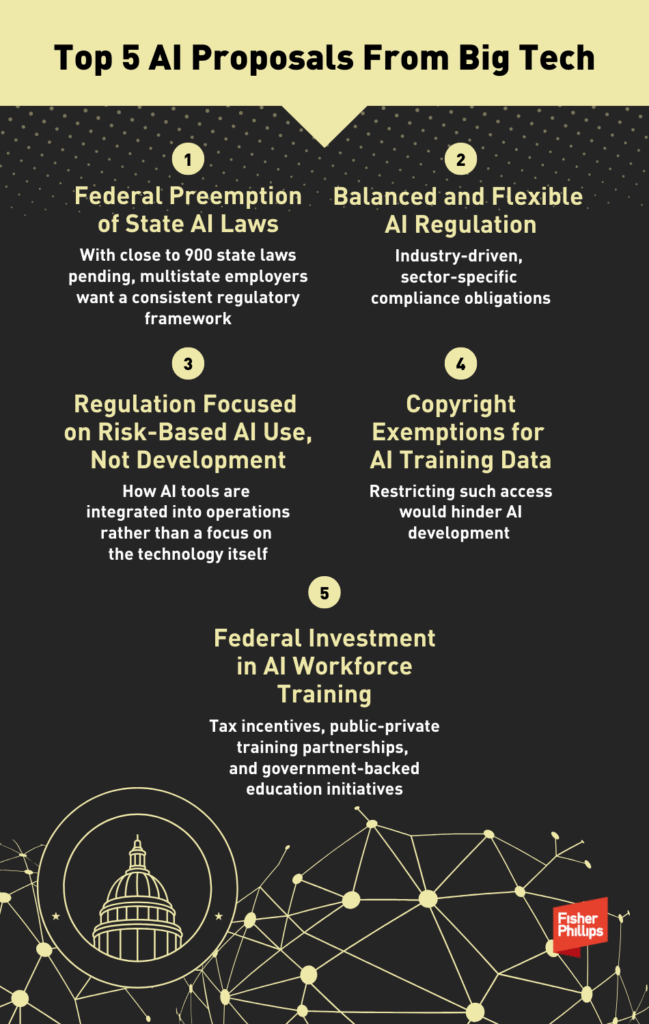
AI Big Tech Infographic

Big Tech Calls for National AI Regulation to Stop Patchwork of State Laws: What Employers Need to Know

Major technology companies and industry groups just responded to the White House’s request for feedback on its AI plan and called for a national framework to prevent fragmented state laws on workplace use and more. The majority of comments from the country’s most influential tech companies asserted that a unified federal approach would provide much-needed

Big Tech Calls for National AI Regulation to Stop Patchwork of State Laws: What Employers Need to Know Read More »

AI Ethics: What it is and why it matters

AI Ethics: What it is and why it matters

The role of governance in ethical AI An AI governance framework forms the backbone of an ethical AI implementation. These structures establish clear lines of responsibility and accountability throughout the AI life cycle. A comprehensive governance strategy should define the decision-making processes – including human oversight – and assign specific roles for AI project management.

AI Ethics: What it is and why it matters Read More »

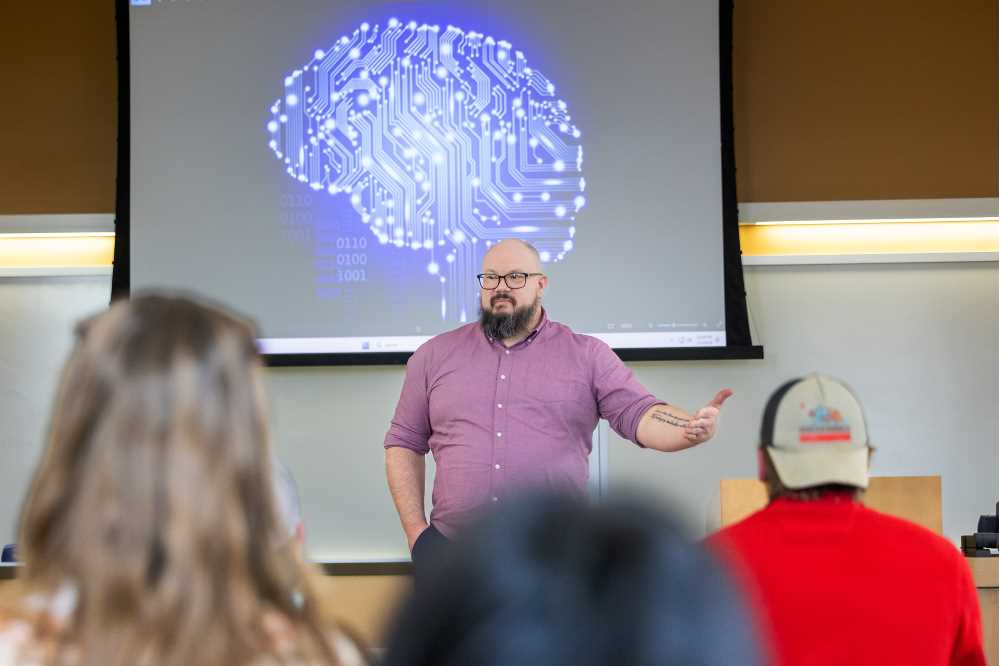
Photo of Stewart Eskew, assistant teaching professor of Philosophy, teaching a philosophy class at UW-La Crosse. The AI Ethics Certificate program will be housed within the Philosophy Department. Artificial intelligence (AI) ethics is a branch of ethics that explores complex ethical challenges posed by AI technologies.

Navigating the AI frontier: UWL’s new AI Ethics Certificate prepares students for leadership in AI-driven world

The AI Ethics Certificate program will be housed within the Philosophy Department. Artificial intelligence (AI) ethics is a branch of ethics that explores complex ethical challenges posed by AI technologies. Here Stewart Eskew, assistant teaching professor of Philosophy, teaches a philosophy class. The rapid expansion of Artificial Intelligence (AI) is transforming industries from healthcare to

Navigating the AI frontier: UWL’s new AI Ethics Certificate prepares students for leadership in AI-driven world Read More »

How organizations build a culture of AI ethics | MIT Sloan

How organizations build a culture of AI ethics | MIT Sloan

open share links close share links Artificial intelligence is revolutionizing industries, by automating customer service, optimizing supply chains, personalizing marketing campaigns, and in countless other ways. But with great power comes great responsibility — and risks. Organizations today must work to ensure that the AI systems they build or implement are safe, secure, unbiased, and

How organizations build a culture of AI ethics | MIT Sloan Read More »

Center for Ethics appoints Anne-Elisabeth Courrier as AI ethics liaison | Emory University | Atlanta GA

Center for Ethics appoints Anne-Elisabeth Courrier as AI ethics liaison | Emory University | Atlanta GA

Anne-Elisabeth Courrier, a leader in research and teaching at the intersection of AI ethics, law and data, has assumed the role of artificial intelligence ethics liaison, a new position created in the Emory University Center for Ethics. Courrier, an adjunct professor at the Emory School of Law and associate professor in comparative law at Nantes

Center for Ethics appoints Anne-Elisabeth Courrier as AI ethics liaison | Emory University | Atlanta GA Read More »

Automated Hiring Tools: Are My Hiring Practices Subject to AI Regulation?

Automated Hiring Tools: Are My Hiring Practices Subject to AI Regulation?

Alexandra Stathopoulos Partner San Francisco; Los Angeles Alex Stathopoulos defends employers in complex wage and hour class actions and high-stakes single plaintiff cases, and provides creative and practical counseling on new and developing areas of the law, including how to protect companies from “fake” employees, artificial intelligence and the evolving regulatory landscape

Automated Hiring Tools: Are My Hiring Practices Subject to AI Regulation? Read More »