Get stories like this delivered straight to your inbox. Sign up for The 74 Newsletter
I’ll never forget the look in my student’s eyes as she worked through a math lesson I had designed with ChatGPT. The goal was to connect mathematical concepts to something real — U.S. Department of Labor data on gender, income and education.
The student, then a 17-year-old high school senior, calculated the wage gap and realized she could lose more than $500 every week simply for being a woman.
Her reaction was a mixture of curiosity, confusion and frustration as the abstract became personal. Demoralized at first, she turned that awareness into action, naming the steps she could take to confront the wage gap: choosing college majors with higher earning potential, preparing to negotiate her pay and pursuing career pathways that would give her more control over her future.
What could have been a theoretical algebra exercise in calculating changes in a dataset over time became a moment of connection. It showed me that artificial intelligence has the power to make the intangible tangible.
Moments like this remind me why I became a teacher: to ignite a lifelong love of learning that empowers students to use what I teach them to shape their futures. The data backs it up: Teachers who use AI report greater optimism about student outcomes.
Like any major shift, the introduction of AI in education has sparked curiosity, skepticism and fear among my fellow teachers. After 20 years in the classroom, I understand the unease. We worry about what AI might mean for our jobs, our relationships with students and even our brains. The fear is that it will strip humanity out of education.
In my classroom, the opposite happened.
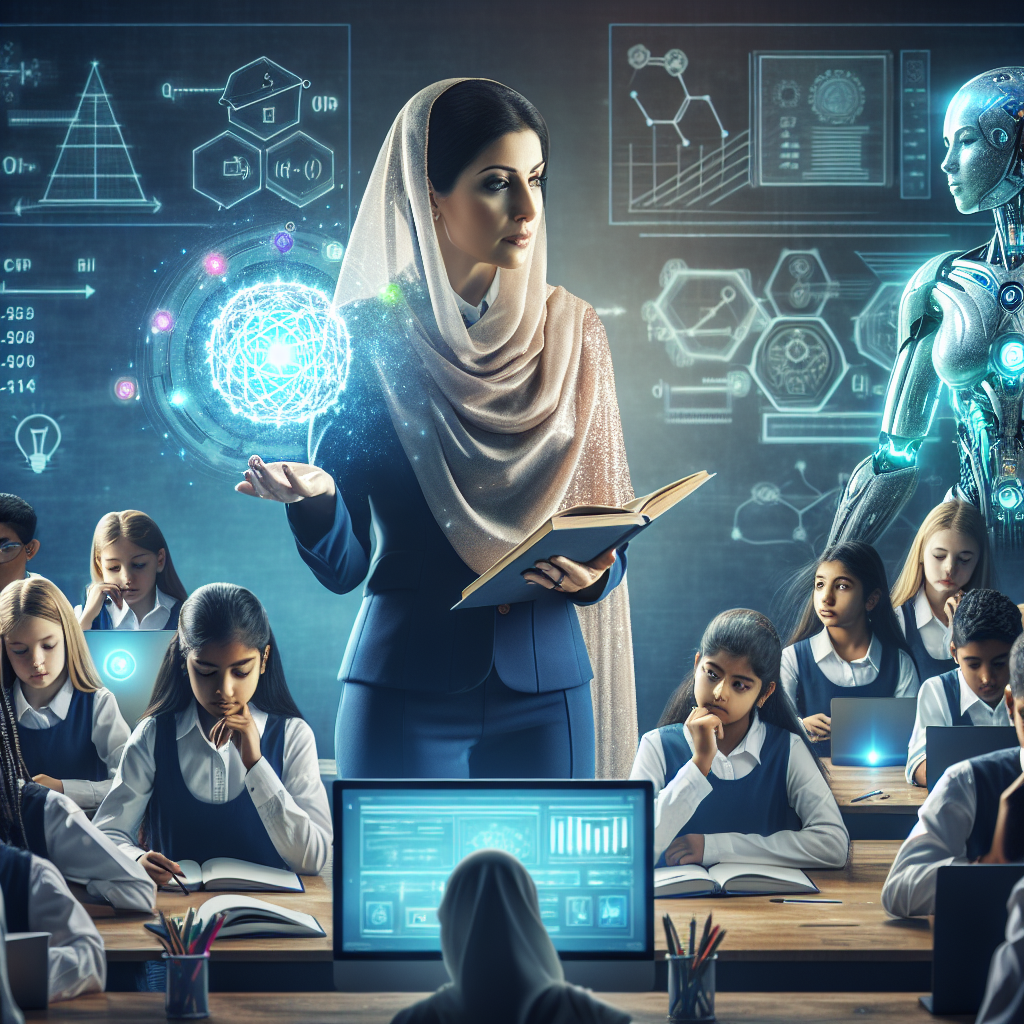
Used thoughtfully and ethically, AI hasn’t replaced the human experience, it’s deepened it. It’s become a valuable tool for teaching in ways that are more personal, engaging and, ultimately, more powerful.
Creating that student’s lightbulb moment about the gender pay gap took planning, careful research and thoughtful design, areas where I can use AI as a collaborative partner. I asked ChatGPT to suggest real-world datasets to connect rate of change, educational attainment and salary. AI did the heavy lifting of generating options, while I reviewed, adapted and refined them so they fit my students’ lives and reflected their interests. AI built the foundation of the lesson, while I brought expertise, creativity and the deep knowledge of who my students are.
The time I can save by having AI do the paperwork frees me up to design learning experiences rooted in my students’ interests, passions and goals. I can create lessons that help them see the real value of math and themselves as capable learners. It allows me to make room for teaching that affirms their identities and strengths, building their confidence step by step in their daily learning.
Interestingly, my first real breakthrough with AI didn’t come from a math problem, but from journals that my students keep on their laptops. I ask them to write in these journals regularly, which might seem unusual for a math teacher. But they give students space to share their struggles, celebrate their successes and reflect on deeper issues like race, identity and self-doubt.
After the entries are uploaded anonymously, I ask ChatGPT to surface themes and patterns and identify common threads. Then, I share these with the class through short, anonymous excerpts. Many students discover that others feel the same way they do, trying harder than people realize or being afraid to ask for help. The journals become mirrors, allowing students to see themselves in one another’s experiences.
This kind of reflection would normally take me weeks to sort through on my own. With AI, I can review dozens of student journals quickly while still preserving each individual voice. ChatGPT helps me identify common themes and nuanced insights without losing sight of the students behind the words. It hasn’t replaced me as a teacher who listens; it’s helped me become a better one.
The question is no longer whether AI belongs in school, it’s how teachers, administrators, policymakers, and the broader education community will shape it to serve students’ growth and well-being. Rising to that challenge will not only prepare the next generation for the world ahead, but empower students to create a better one.
Did you use this article in your work?
We’d love to hear how The 74’s reporting is helping educators, researchers, and policymakers. Tell us how