The National Science Foundation is investing $100 million in five National Artificial Intelligence Research Institutes and a central community hub to accelerate open innovation, build an AI-ready workforce and strengthen U.S. global competitiveness.
The public-private funding includes contributions from Capital One and Intel, NSF said Tuesday. The effort aligns with the White House AI Action Plan and supports Executive Order 14277, which calls for expanding AI literacy and education opportunities for American youth.
“Artificial intelligence is key to strengthening our workforce and boosting U.S. competitiveness,” said Brian Stone, NSF’s acting director. “Through the National AI Research Institutes, we are turning cutting-edge ideas and research into real-world solutions and preparing Americans to lead in the technologies and jobs of the future.”
The newly funded institutes will focus on high-impact areas, including mental health, materials discovery, science, technology, engineering and mathematics education, human-AI collaboration and drug development. Each institute will also help build a national infrastructure for AI education and workforce development.
The public-private investment recipients are:
- NSF AI-Materials Institute led by Cornell University. NSF AI-MI will accelerate the discovery of next-generation materials essential to energy, sustainability and quantum technologies.
- NSF AI Institute for Foundations of Machine Learning led by the University of Texas at Austin. NSF IFML will expand generative AI to new domains, including protein engineering and clinical imaging.
- NSF Institute for Student AI-Teaming led by the University of Colorado Boulder. NSF iSAT will advance AI support for group learning and co-develop a semester-long curriculum to build AI literacy.
- NSF Molecule Maker Lab Institute led by the University of Illinois Urbana-Champaign. NSF MMLI will develop advanced AI tools, including new types of language models and intelligent agents, that can reason, predict and help design useful molecules such as drugs, catalysts and new materials.
- NSF AI Institutes Virtual Organization led by the University of California, Davis. NSF AIVO will connects federally funded AI Institutes, government stakeholders and the public to create a cohesive and collaborative innovation ecosystem.
- NSF AI Research Institute on Interaction for AI Assistants led by Brown University. NSF ARIA will accelerate the development of next-generation AI assistants that are safer, more effective and better able to adapt to individual user needs.
President Donald Trump has signed an executive order approving a proposed deal that would keep video-sharing platform TikTok operational in the U.S. while protecting national security. Engage with U.S. military leaders and top industry experts at the Potomac Officers Club’s 2025 GovCon International and Global Defense Summit as they tackle global defense challenges, from supply chain risks to sanctions and international regulations. Save your spot now for this Oct. 16 event to gain critical insights and connect with key decision-makers! ‘Qualified Divestiture’ of TikTok’s US Operations In a fact sheet published Thursday, the White House said TikTok’s U.S. operations would
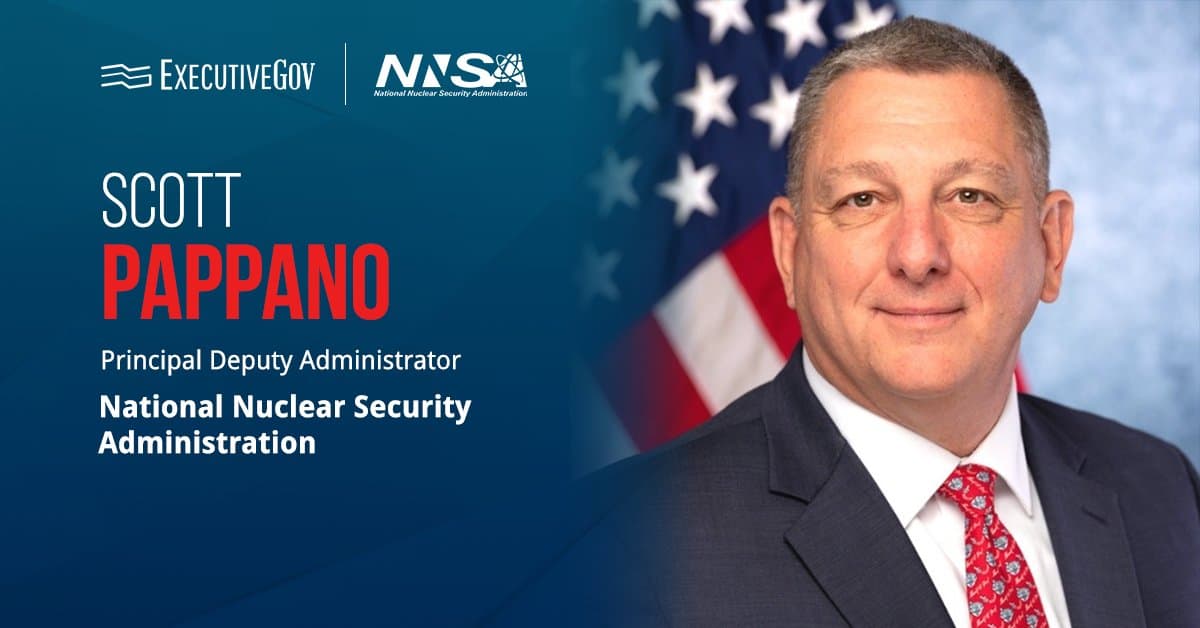
Retired Vice Adm. Scott Pappano has been confirmed as principal deputy administrator for the National Nuclear Security Administration. According to Congress records, legislators voted 51-47 to appoint Pappano. He also confirmed his new position in a LinkedIn post Thursday. Who Is Scott Pappano? President Donald Trump nominated Pappano to be principal deputy administrator for NNSA in February. Pappano is a seasoned military leader who most recently served as principal military deputy assistant secretary of the Navy for research, development and acquisition. He also held leadership positions at the Special Operations Forces Mobility Program Office and the Strategic and Attack Submarine
The General Services Administration and xAI have signed an agreement to make the latter’s Grok frontier artificial intelligence models available to federal agencies through March 2027. GSA said Thursday the partnership with xAI is part of the agency’s OneGov initiative, which aims to simplify the procurement of AI tools to help accelerate federal AI adoption. The new deal is reportedly the lowest price yet for an AI offering through the partnership. “Widespread access to advanced AI models is essential to building the efficient, accountable government that taxpayers deserve—and to fulfilling President Trump’s promise that America will win the global AI